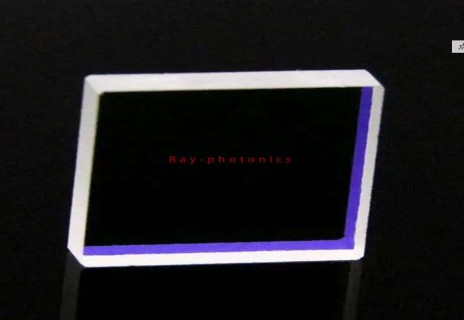
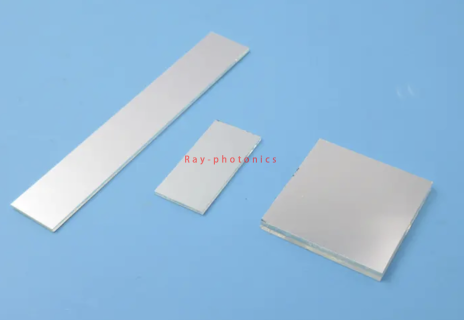
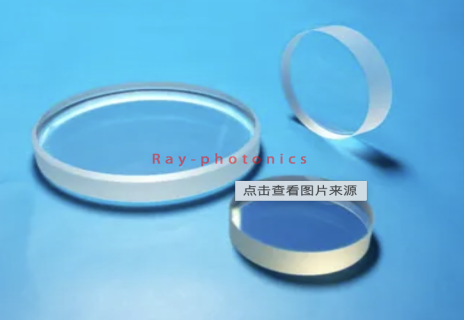
Optical mirrors are designed with specialized coatings to provide high reflectivity across different wavelength ranges. They are widely used in laser systems, imaging, spectroscopy, and infrared detection.
UV Mirrors (190–400 nm)
Material: Fused silica, MgF₂ coatings
Features: High UV resistance, >90% reflectivity
Applications: UV lasers, photolithography, fluorescence detection
Visible Mirrors (400–700 nm)
Material: Dielectric coatings, aluminum (Al), silver (Ag)
Features: High reflectivity across the visible spectrum
Applications: Imaging optics, projection systems, laboratories
Near-IR Mirrors (700 nm–2.5 μm)
Material: CaF₂, ZnSe, Ge substrates
Features: Low absorption, high laser damage threshold
Applications: Fiber lasers, optical communication, medical lasers
Mid/Far-IR Mirrors (2.5 μm–1000 μm)
Material: Germanium (Ge), zinc selenide (ZnSe), silicon (Si)
Features: Excellent infrared reflectivity, durable performance
Applications: IR spectroscopy, thermal imaging, aerospace, defense
Quick Comparison
| Type | Wavelength Range | Materials | Key Applications |
|---|
| UV | 190–400 nm | Fused silica, MgF₂ | UV lasers, photolithography |
| Visible | 400–700 nm | Dielectric, Al, Ag | Imaging, projection |
| NIR | 700 nm–2.5 μm | CaF₂, ZnSe, Ge | Fiber lasers, communication |
| Mid/Far-IR | 2.5–1000 μm | Ge, ZnSe, Si | IR spectroscopy, aerospace |
Discover optical mirrors from UV to infrared. Learn about their materials, wavelength ranges, and applications in lasers, imaging, and spectroscopy.”